
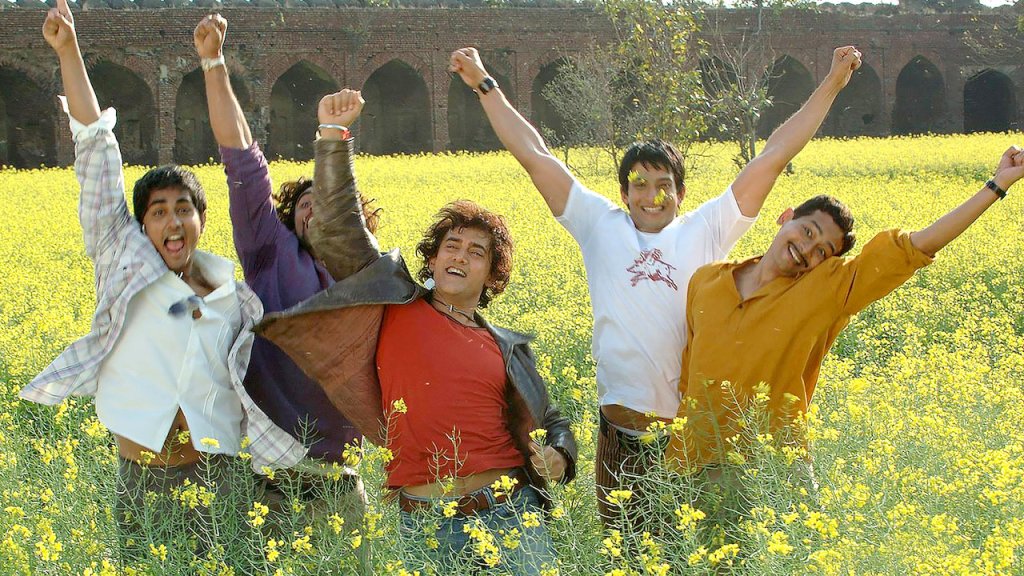
Fifteen years ago I went to watch Rang De Basanti with few college friends and when I came out of the theatre , I wasn’t the same person anymore. The powerful storytelling shook my soul, revolutionised my conscience and suddenly made me aware about my history, heritage and a mighty feeling of belongingness to this motherland. And when I am writing this , I can pretty much say the same on behalf of that whole generation.
It was the decade of 2000’s which legitimately became the era of new wave cinema with stunning filmmakers like Anurag Kashyap, Vishal Bharadwaj, Ashutosh Gowarikar, Farhan Akhtar, Dibakar Banerjee, Shimit Amin attempting brave, experimental films and shaking up Hindi cinema with one film at a time.
Rang De Basanti, released on 2006, received massive success and love, nationwide and became the pop culture icon with its tale of friendships, music, lyrics and revolutionary dialogues. It put the final stamp on the fact that Indian audiences were ready for more realistic cinema and for filmmakers trying to make important conversation.
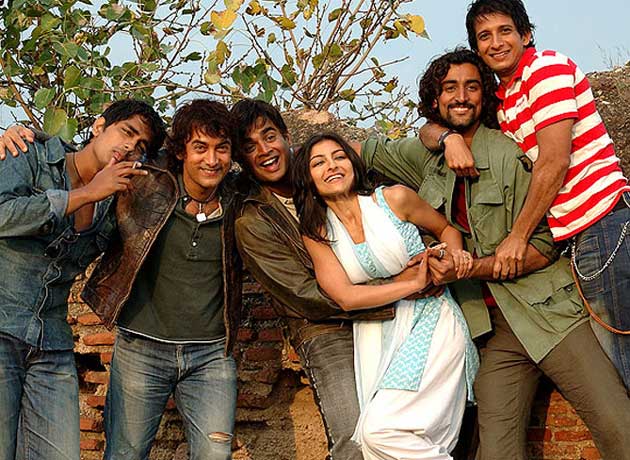
Khan, a 40 something star, reaffirmed his image of Mr. Perfectionist consecutively after Lagaan and Dil Chahta Hai with amazing portryal of an aged collegiate who choses to hang around college because he doesn’t find any purpose, belongingness outside the university campus.
The beauty of the script and why it stood the test of time is because he didn’t dominate the script and the journey belonged to each friend letting them bloom and shine.
It also spoke so much about religious and racial tolerance through a college group of Sukhi, DJ, Karan, Sonia, Aslam, Laxman, Flight Lt. Ajay and a Britisher, Sue, the youngsters from diverse religion, economical and social background.
The industry got a new magician of words in Prasoon Joshi who wrote soul stirring lyrics of Luka Chhupi, Khalbali, Roobaru and the iconic dialogues. which are quoted till date. The lyrics of Roobaru, “Sooraj ko main nigal gaya.” were appreciated even by ex Prime Minister, Atal Bihari Vajpayee.
The Mozart of India, A.R. Rehman created immortal tunes ranging from young, peppy Masti ki Pathshala to soothing Tu Bin Bataye, heart-breaking Luka Chhupi toh passionate Khalbali, from zealous Roobaru to haunting Khoon Chala. Rang De Basanti is easily one of the greatest movie albums from that decade.
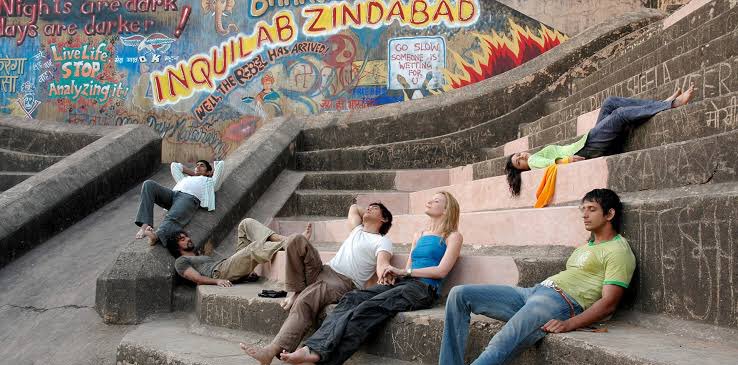
The visionary filmmaker Rakeysh Mehra’s film is still relevant after fifteen years, now politically, socially and culturally more than ever. He originally intended to make a film on the origin of arm revolution in the freedom struggle of India and while casting young actors from Universities he realised that the youth failed to identify with their nation and its history. Thus came the story of six young and restless, carefree friends of DU acting for a documentary on India’s freedom struggle and when the spirit of history collides with the body of present, the course of their lives changes forever.
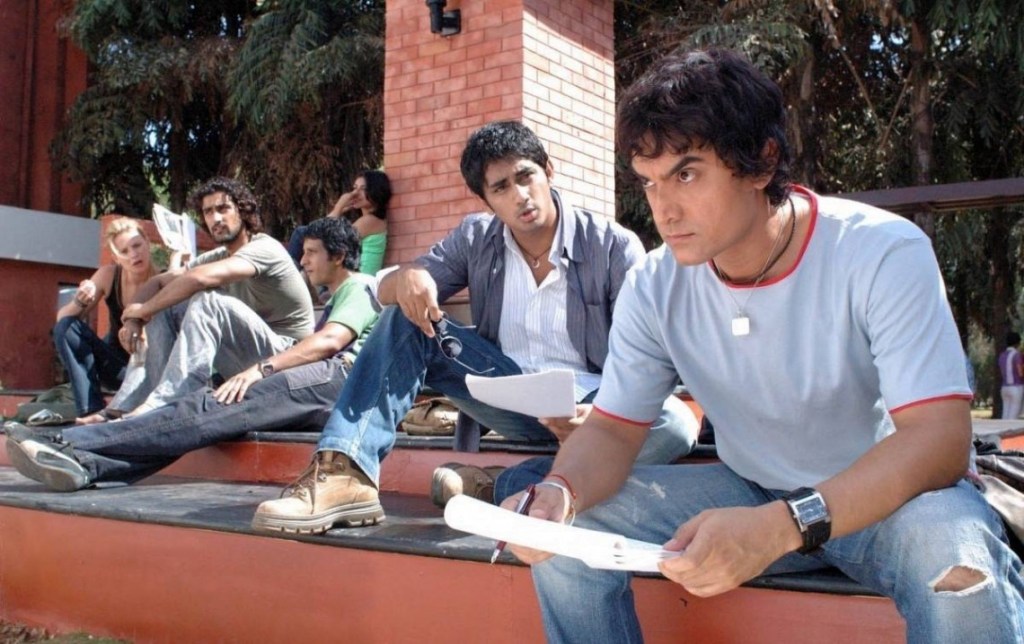
The remarkable cinematography of Binod Pradhan switching between sepia for past and natural for present stunningly showed the journey of characters from history to contemporary. I remember we had a question in FTII’s entrance exam asking what filter did Binod Pradhan chose while filming the past sequence in Rang De Basanti.
Mehra’s deeply moving and dramatic storytelling was ably supported by rythmic editing of P.S. Bharathi.

I doubt if the film could even see the light of the day if it was made in the current scenario of the country. It’s probably the only successful film which cannot boast about itself being a film with an up-front message.
Honestly what can one learn from the ending of Rang De Basanti? It’s an unconventional patriotic film in Hindi cinema which replicates the fight for freedom from the Britishers to the fight against the corruption and apathy in the system yet the consequences of it cannot be replicated in reality. Fifteen years later with the present political undertone of the nation and with jingoistic brand of cinema thriving, it won’t even be considered as a very nationalist film.
So what makes Rang De Basanti, still loved, still praised, still relevant? The patriotism of the film shines in the conversation it attempts to make, the realisation it instills in the youth about their power and responsibilities and the way it tries to involve them in nation building.
“Koi bhi desh perfect nahi hota.
Use perfect banana padta hai.”

 Cinema and Beyond
Leave a comment